Concept
Concept
Prologue
A Memory of the Land
Tsuwano is by no means simply a "tourist town". A small domain built deep in the mountain valleys of Iwami — the Tsuwano clan — followed its own singular path.
Set against a demanding natural environment, Tsuwano actively absorbed information and techniques from other countries through vibrant trade and cultural exchange. The result was nearly 260 years as a "castle town of knowledge", fostering its own culture and thought.
Surviving today as the "Little Kyoto of San'in", the charm of this town is in the streetscape itself. The morning light on Sekishū-tile roofs, koi gliding through the channels, the row of white-walled samurai residences — it is as if a stratum of time itself has been preserved. Not only the streetscape: the yabusame of Washibara Hachimangū, the heron dance of Tsuwano Yasaka Shrine, and other traditional events staged in the former castle town still live on as part of daily culture.
Yet the appeal of Tsuwano is not simply its quiet elegance. The defining trait of this land is that openness of mind and resolve have coexisted here.
At the domain school Yōrōkan, scholars studied Rangaku (Dutch studies), Kokugaku, mathematics, medicine and more, producing figures such as Nishi Amane (a founder of modern Japanese philosophy) and Mori Ōgai (literary giant and military physician). In the late Edo period, faced with the threat of Western powers, the Tsuwano domain maintained neutrality during the Bakuchō war on the conviction that internal conflict should be avoided, and is also known for being one of the first in the nation to carry out hanseki-hōkan (the return of land and people to the emperor).
— A DNA of wisdom and resolve flows quietly through this town.
Wakatsuki here is an archive of the knowledge and sensibility that Tsuwano has woven. Every moment touched at the inn or at our restaurant becomes an experience that overlaps with the history and climate of this land.
To spend time here is not merely to stay overnight. It is the beginning of an adult's journey — one in which the memory of the land is read with all five senses.
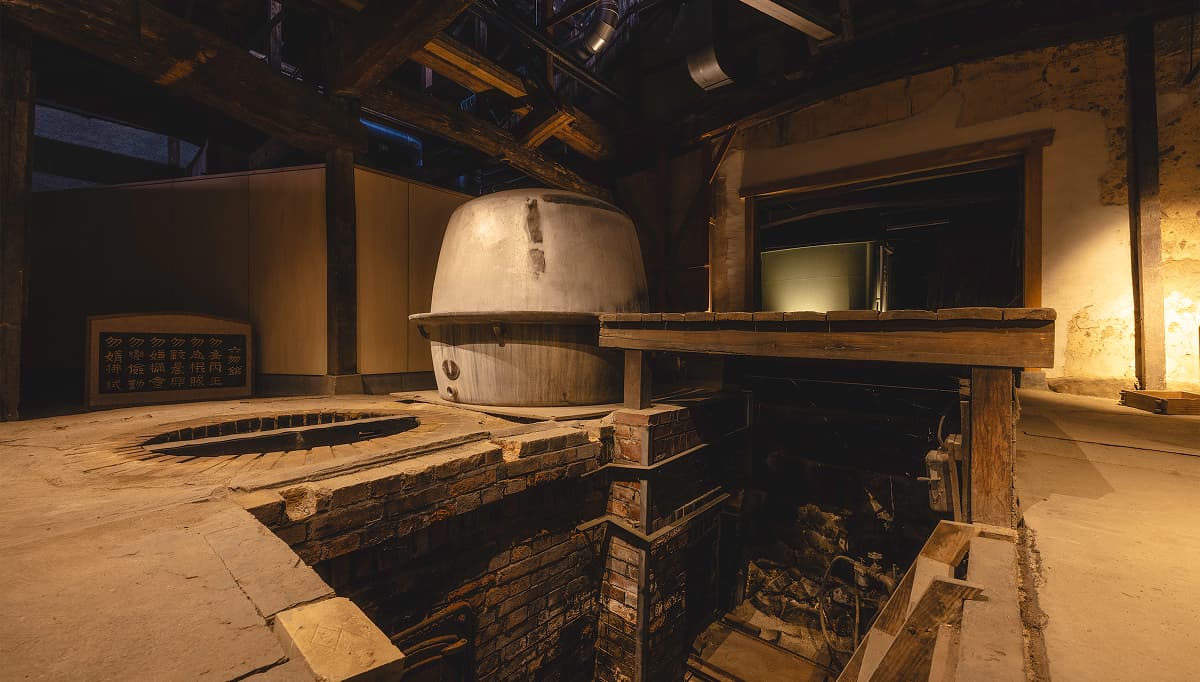
Hashimoto Heritage
A storehouse of dignity, living in the town Hashimoto Honten
Hashimoto Heritage
A storehouse of dignity, living in the town Hashimoto Honten
There was once a storehouse in Tsuwano that drew a singular sense of reverence. The sake brewery — Hashimoto Honten. The brewing hall is said to have held an atmosphere so dignified that even family members hesitated to enter.
Deep in autumn, with October's arrival, a peculiar tension would run through the storehouse. From before dawn the boiler fires were lit, and the lively voices of the men would resound through the brewery. In the space led by the head brewer (tōji), women and children were forbidden even to set foot. The sake-making season lasting through winter was, truly, days of restless tension.
The main label was "Kairyō". Starting with three kinds — Grade 1, Grade 2 and the original sake — they later crafted close to ten varieties including junmai, ginjō and nigori. Yet the essence of Hashimoto Honten was not merely a place that produced sake.
The master's creed was "I'll put up the money but not my mouth", entrusting everything to the trust placed in the head brewer. Meanwhile, never sparing donations for local festivals and cultural causes, the brewery also fulfilled the role of a spiritual pillar of Tsuwano.
The head of the Hashimoto family — its master — was a local notable and was also active as a prefectural assembly member. In his later years he is said to have served as guide for an imperial journey. The house truly stood as a symbol of the town's dignity and culture.
(* Edited at Wakatsuki after hearing about that time from a son of the Hashimoto family.)
Vision
Our wish and our vision
The Takatsu River flowing quietly, the streetscape of distinctive Sekishū tiles, the festivals and ways of life nurtured by the community. Yet, amid depopulation, those memories are slipping away. Hashimoto Honten too — which brewed sake for over three hundred years — was about to lower its curtain for lack of a successor.
Wakatsuki is far more than a renovation of an old house.
Restoring the building alone does not bring people's wishes back to life. To dwell on the past, to touch the present, and to weave a new wish into the future — only when feelings come and go across time does memory truly come alive.
The resolve of the people of Tsuwano, who once carried pioneering thought and a concern for the future of Japan. The taut atmosphere of men preparing sake from before dawn. The respect for the dignity and history of a town protected by Tsuwano's people and storehouses. To feel with the five senses the memory that has soaked into that space, and to lay one's own self upon it — that is the experience that awaits here.
Wakatsuki wishes to be a vessel that inherits this time and memory.
And at the same time, we, too, have a wish we want to weave into the future. It is to bring sake-making back to life in this place. Inheriting three hundred years past, taking on three hundred years to come — there is a great dream of rebuilding the brewery.
In this space where the time and experience of the land take root, every visitor speaks with the place through their senses and leaves their own trace. As the wishes of those who come gather, layer by layer, we believe Wakatsuki's dream too will be woven onwards toward the future.
And so the lineage of Tsuwano's knowledge and sensibility, never broken, will go on being woven into new memory — that is the reason Wakatsuki exists.